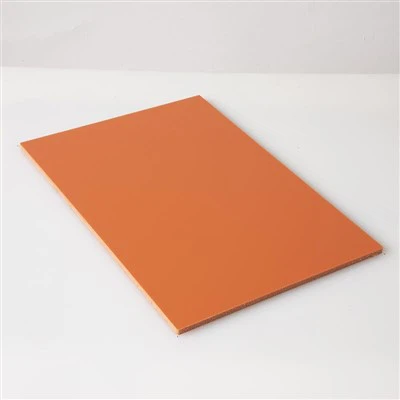
As a dedicated supplier of PP sheets, I often encounter inquiries from customers about various technical aspects of our products. One question that frequently comes up is, "What is the elongation at break of PP sheets?" In this blog post, I'll delve into this topic, explaining what elongation at break means, how it's measured, and why it matters in the context of PP sheets.
Understanding Elongation at Break
Elongation at break, also known as ultimate elongation, is a critical mechanical property that measures the maximum amount a material can stretch before it breaks. It is expressed as a percentage of the original length of the specimen. For instance, if a PP sheet specimen with an initial length of 100 mm can stretch to 200 mm before breaking, its elongation at break is 100%.
This property is crucial because it provides insights into the material's ductility and flexibility. A high elongation at break indicates that the material can withstand significant deformation without fracturing, making it suitable for applications where flexibility and stretchability are required. Conversely, a low elongation at break suggests that the material is more brittle and may break under relatively small amounts of stress.
Measuring Elongation at Break
The measurement of elongation at break is typically carried out using a tensile testing machine. Here's a step-by-step overview of the process:
- Specimen Preparation: A standard-sized specimen is cut from the PP sheet. The dimensions of the specimen are usually specified by relevant testing standards, such as ASTM D638 or ISO 527.
- Mounting the Specimen: The specimen is securely mounted between the grips of the tensile testing machine. The machine is then set to apply a gradually increasing tensile force at a constant rate.
- Testing: As the force is applied, the machine records the change in length of the specimen until it breaks. The elongation at break is calculated by dividing the increase in length at the point of breakage by the original length of the specimen and multiplying by 100.
It's important to note that the elongation at break can vary depending on factors such as the type of PP resin used, the manufacturing process, and the presence of additives or fillers. Therefore, it's essential to conduct multiple tests under consistent conditions to obtain reliable results.
Factors Affecting the Elongation at Break of PP Sheets
Several factors can influence the elongation at break of PP sheets. Let's take a closer look at some of the most significant ones:
Type of PP Resin
There are different types of polypropylene resins available, each with its own unique properties. Homopolymer PP, for example, is known for its high stiffness and relatively low elongation at break. Copolymer PP, on the other hand, offers better impact resistance and higher elongation at break due to the presence of comonomers.
Manufacturing Process
The way PP sheets are manufactured can also have a significant impact on their elongation at break. Extrusion, for instance, is a common manufacturing process for PP sheets. The extrusion conditions, such as temperature, pressure, and screw speed, can affect the molecular orientation and crystallization of the PP resin, which in turn influences the mechanical properties of the sheets.
Additives and Fillers
Additives and fillers are often incorporated into PP sheets to enhance certain properties or reduce costs. However, they can also affect the elongation at break. For example, the addition of glass fibers can increase the stiffness of the sheets but may reduce their elongation at break. On the other hand, elastomeric additives can improve the flexibility and elongation at break of the sheets.
Importance of Elongation at Break in PP Sheet Applications
The elongation at break is a crucial consideration in many applications of PP sheets. Here are some examples:
Packaging
In the packaging industry, PP sheets are widely used for making containers, trays, and displays. A high elongation at break is desirable in these applications because it allows the sheets to be formed into complex shapes without cracking or breaking. This ensures that the packaging can withstand the stresses of handling, transportation, and storage.
Automotive Interiors
PP sheets are also used in automotive interiors for applications such as door panels, dashboard covers, and seat backs. The ability of the sheets to stretch without breaking is essential in these applications to ensure a proper fit and to withstand the vibrations and impacts experienced during vehicle operation.
Geotextiles
Geotextiles made from PP sheets are used in civil engineering applications such as soil stabilization, erosion control, and drainage. A high elongation at break is necessary in these applications to allow the geotextiles to conform to the irregularities of the soil surface and to withstand the forces exerted by the soil and water.
Our PP Sheet Products and Their Elongation at Break
At our company, we offer a wide range of PP sheets, including PP Whtie Sheets, PP Natural Sheet, and PP Colored Sheet. Each of these products is carefully formulated and manufactured to meet the highest quality standards.
Our PP sheets typically have an elongation at break ranging from 200% to 600%, depending on the specific product and application requirements. We conduct rigorous quality control tests to ensure that our sheets meet or exceed the specified elongation at break values.
Contact Us for PP Sheet Procurement
If you're interested in purchasing PP sheets for your specific application, we'd love to hear from you. Our team of experts can provide you with detailed information about our products, including their elongation at break and other mechanical properties. We can also help you select the right product for your needs and provide customized solutions if required.


Whether you're a small business or a large corporation, we're committed to providing you with the best quality PP sheets at competitive prices. Contact us today to start a conversation about your PP sheet procurement needs.
References
- ASTM D638 - Standard Test Method for Tensile Properties of Plastics
- ISO 527 - Plastics - Determination of Tensile Properties
- "Polypropylene: Structure, Blends and Composites" by S. Fakirov